Tank or tankless water heater: which one should I get?
Short answer
A tankless heater heats water on demand and never runs out, but flow drops if you open two taps at once. A storage heater keeps a tank of already-hot water: it holds pressure across several taps simultaneously, but once it's empty you wait for it to reheat. For one or two people with one bathroom, tankless; for a family with more than one bathroom, a tank.
It’s the decision most households put off, and it’s almost always made badly: by looking at the price of the unit instead of at how many hot taps will be open at the same time. That’s really the only criterion that matters.
The difference in one line
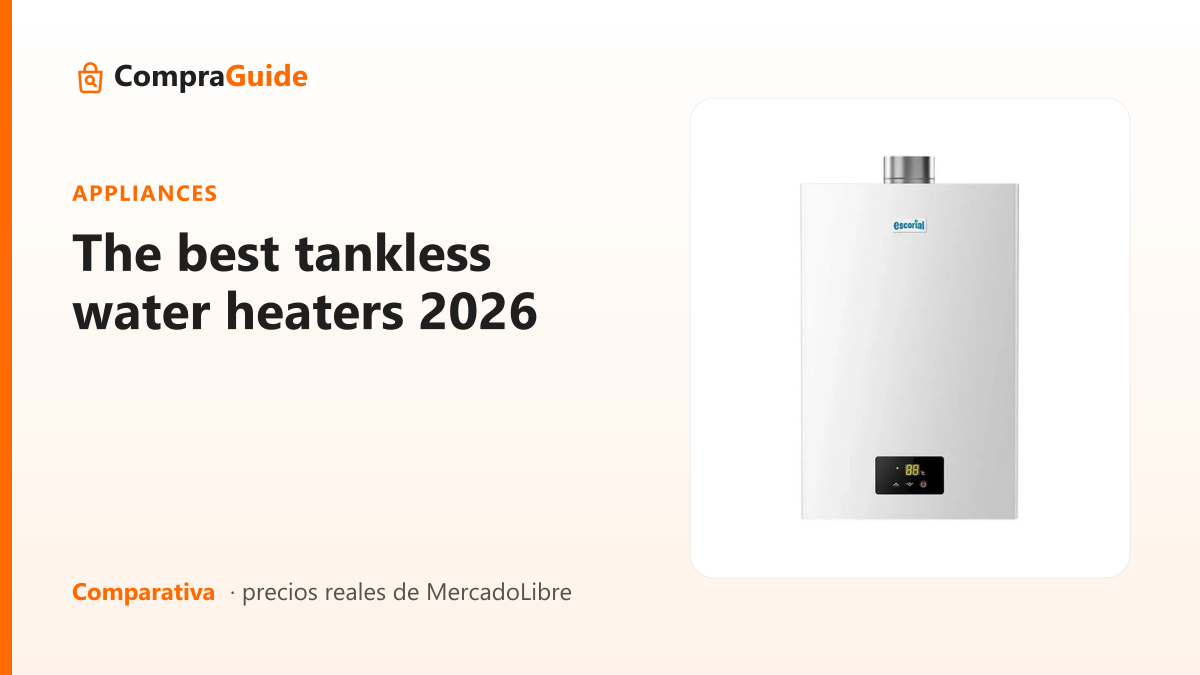
- Tankless: heats water at the moment it flows through. Stores nothing.
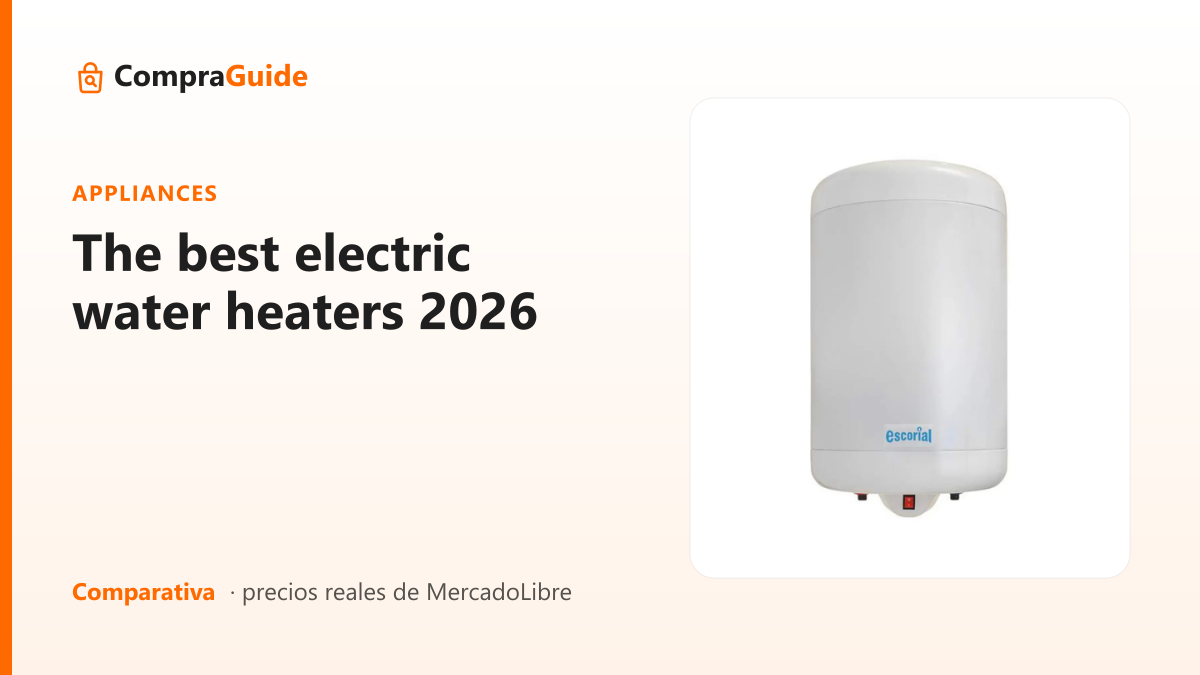
- Storage tank: keeps a tank of already hot water, ready to use.
Everything else follows from that.
Head to head
| Tankless | Storage tank | |
|---|---|---|
| Hot water | Endless, never runs out | Limited to the tank |
| Several taps at once | Loses flow and temperature | Holds pressure well |
| Wait when you open a tap | A few seconds | Hot immediately |
| If it runs out | It doesn’t | 1 to 3 hours to reheat |
| Space | Compact, wall-mounted | Takes up real room |
| Standby consumption | Zero | Spends to keep the tank hot |
| Unit price | Lower | Higher |
How to choose in 30 seconds
Choose tankless if: you live alone or as a couple, you have one bathroom, and two hot taps aren’t usually running at the same time. It’s cheaper, takes less space and you’ll never run out of hot water.
Choose a storage tank if: there are three or more of you, there’s more than one bathroom, or someone regularly showers while the dishes get washed. Steady pressure at two points at once is something a tankless simply cannot deliver.
Very common case: family of four, two bathrooms, one tankless heater. That’s the recipe for the shower going cold every time someone opens a tap. There a storage tank isn’t a luxury, it’s the fix.
The number to look at on each
On a tankless, the litres per minute: how much water it can heat per minute. A 14 l/min unit performs far better than a 9 when demand overlaps.
On a storage tank, the capacity in litres (20-30 per person) and, almost as importantly, the recovery time: how long it takes to get the tank hot again after you empty it.
Gas or electric: a separate decision
Both tankless and storage heaters exist in gas and electric versions, and that’s a second decision, independent of the first:
- Gas: cheaper to run, but needs a gas supply and correct ventilation. It’s the norm where mains gas is available.
- Electric: more expensive to run, but installs anywhere, with no flue and no carbon monoxide risk. It’s the option where there’s no natural gas, or for an added bathroom far from the existing installation.
Safety: any gas appliance must be installed by a licensed fitter and have compliant ventilation. That’s not bureaucratic detail: poor flue gas evacuation is the cause of carbon monoxide poisoning, which you can neither see nor smell.
Frequently asked
What tank size do I need?
The practical rule is 20 to 30 litres per person for normal use. For one or two people, 50 to 55 litres is enough; for a family of three or four, 80 to 110 litres; and if there are more of you or you have a bathtub, go to 150 litres. Careful about undersizing: if the tank empties, the reheat wait is one to three hours depending on the model. And careful about oversizing too, because a bigger tank than you need spends energy all day keeping hot water you're never going to use.
Can a tankless heater run out of hot water?
No, and that's its big advantage: it heats water as it flows, so it can supply hot water indefinitely. What it does have is a flow limit: it can heat a certain number of litres per minute and no more. If you're in the shower and someone opens the kitchen tap, the shower goes cold or loses pressure. That's why the figure that matters on a tankless unit isn't tank litres (it has none) but litres per minute it can heat.
Which one costs less to run?
Generally the tankless, because it only consumes when you open a tap. A storage heater has what's called standby loss: it spends energy all day keeping the tank hot whether you use it or not. That loss is small in a modern, well-insulated tank, but it runs 24 hours a day. That said, the difference between formats usually matters less than the fuel: a gas water heater is considerably cheaper to run than an electric one, regardless of type.
Ready to choose?
These are the guides with real products and verified prices that match this question.
The figures in this note are based on the products' public specifications. How we do it. See all questions →