Spin dryer vs. tumble dryer: what's the difference?
Short answer
A spin dryer does NOT dry with heat: it spins at high speed and pulls water out by centrifugal force, so clothes come out damp but ready to hang and dry far faster. A hot-air (tumble) dryer really does dry: clothes come out ready to put away, but it costs more, is bigger and uses considerably more power.
This is probably the appliance category with the most confusing marketing in Argentina. The word “secarropas” is used for two machines that do completely different things, and most of what’s sold doesn’t dry clothes in the sense people expect.
The difference, plainly
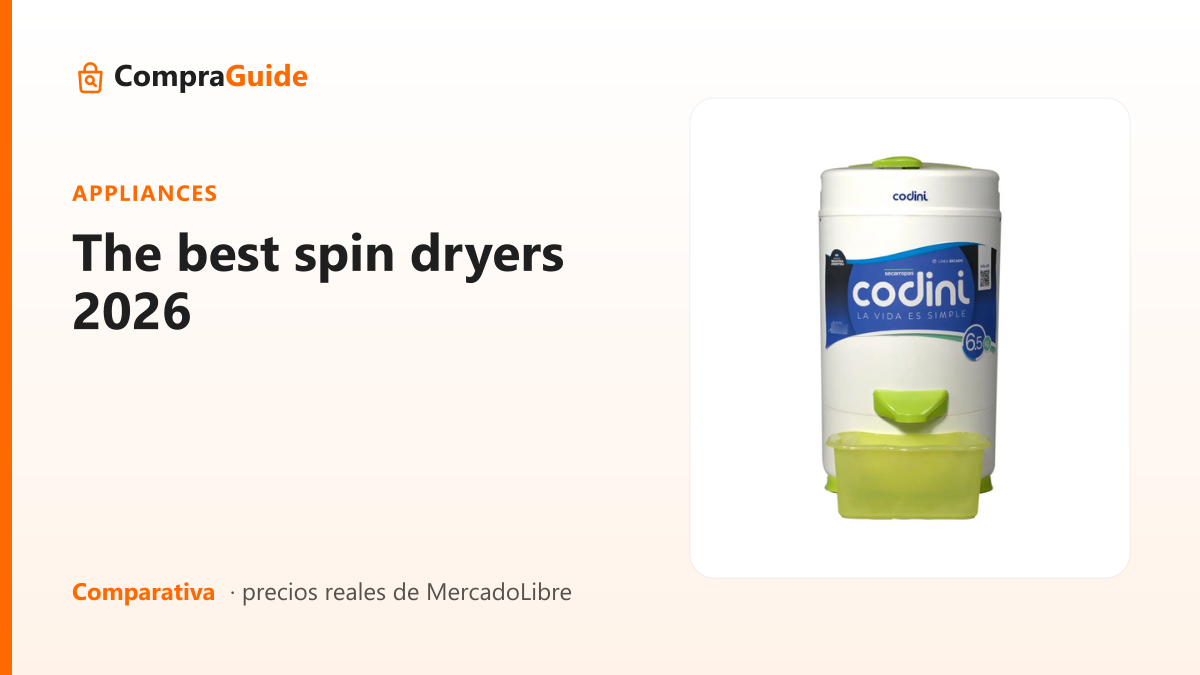
Spin dryer (most of what’s sold): a drum spinning at around 2800 revolutions per minute. Centrifugal force throws the water against the walls and expels it. Clothes come out damp, not dry. Ready to hang, and they dry in a fraction of the time.
Hot-air (tumble) dryer: heats air and circulates it through the drum while the clothes tumble. Clothes come out dry, ready to fold and put away. This is what’s simply called a “dryer” in other countries.
Head to head
| Spin dryer | Tumble dryer | |
|---|---|---|
| How it removes water | Centrifugal force | Evaporation by heat |
| How clothes come out | Damp, ready to hang | Dry, ready to store |
| Do you still hang them? | Yes | No |
| Time | 3 to 5 minutes per load | 1 to 2 hours |
| Consumption | Very low | High |
| Size | Small, portable | Large |
| Price | Accessible | Considerably more |
| Kind to fabrics | Yes (no heat) | Shrinks some fabrics |
Which one suits you
Spin dryer if you have somewhere to hang. Balcony, yard, laundry room, indoor airer. It’s the best value in the category: cheap, small, uses almost nothing, and turns laundry that used to take two days on the line into a few hours. It’s the sensible buy for most households.
Tumble dryer if you have nowhere to hang, or if you live somewhere so humid that indoor laundry takes days and comes out smelling musty. It solves the whole problem: wet clothes in, dry clothes out. In exchange it takes up space and shows on the electricity bill.
The number that matters on a spin dryer
Revolutions per minute (rpm). The more, the more water it removes and the faster things dry afterwards. Good ones run around 2800 rpm; below 2000 the gap versus your washing machine’s own spin narrows considerably.
Then, capacity in kilos: 5 to 5.5 kg for one or two people, 6.5 kg for a family. And a stainless steel drum, which in a machine spinning that fast with wet laundry inside is a sign of durability.
Two usage tips
- Distribute the load evenly. If everything ends up on one side, the drum goes off balance, vibrates hard and the machine “walks” across the floor. Don’t fill it to the brim: the clothes need some room for the spin to be effective.
- Check the lid has a safety lock that stops the drum when opened. It spins very fast and takes a while to stop. That matters if there are children at home.
Frequently asked
So a spin dryer doesn't dry the clothes?
Not in the sense of leaving them ready to put away, and this is the confusion that causes the most disappointment. A spin dryer turns at around 2800 revolutions per minute and expels water by centrifugal force: clothes come out damp, not dripping, and once hung they dry in a fraction of the time they'd take wrung out by hand. It's enormously useful in flats, on rainy days or when there's no sun, but if you expect to pull dry clothes out of the drum, it will disappoint you.
Which suits a flat?
It depends whether you have somewhere to hang. If you have a balcony, a yard or an indoor airer, the spin dryer is the better buy: it's small, cheap, uses very little power and shortens drying enormously. If you have absolutely nowhere to hang clothes, or the flat is so humid that indoor laundry takes days and smells musty, then you need a hot-air dryer, which solves the whole problem even though it costs more.
Can't I just use my washing machine's spin cycle?
It helps, but it's not the same. A washing machine's spin runs at 800 to 1200 rpm; a dedicated spin dryer reaches around 2800. That speed difference translates into considerably more water extracted, and therefore much faster drying on the line. If your machine spins well and you have sun and space, you may not need one; if you live somewhere humid or dry indoors, the difference shows every day.
Ready to choose?
These are the guides with real products and verified prices that match this question.
The figures in this note are based on the products' public specifications. How we do it. See all questions →